Meeting Pods: The Ultimate Guide for Modern Offices
1. What Are Meeting Pods?
Definition and Purpose
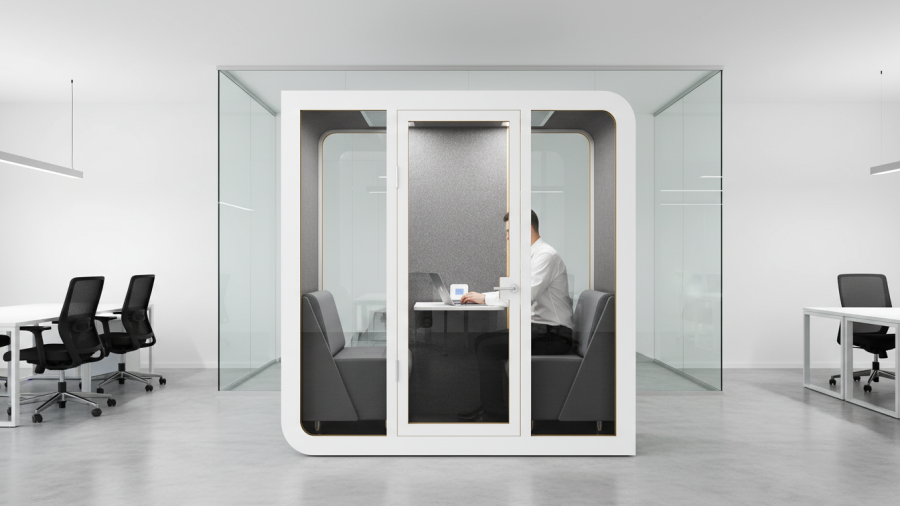
Meeting pods are self-contained, acoustically optimized spaces designed to bring privacy, focus, and control back to open offices. Sometimes called acoustic meeting pods, a meeting booth, phone booth, or huddle pod, they create quiet, purpose-built environments for stand-ups, video calls, interviews, and confidential discussions—without the cost and disruption of building more walls. In essence, a meeting pod is a movable, furnished micro-room that delivers the core benefits of a meeting space with far more flexibility.
Open offices amplify noise and reduce privacy. This leads to more interruptions, strained workplace communication, and a constant shortage of small meeting spaces. That is precisely why organizations turn to Meeting pods: they reduce ambient distractions, keep conversations contained, and ensure small meetings don’t monopolize large conference rooms. Unlike basic room dividers, soundproof meeting pods pair acoustic isolation with proper ventilation, lighting, and connectivity—so you get a productive place to work, not just a visual screen.
For leaders weighing the difference from traditional meeting rooms, it comes down to agility and speed. Pods require no major construction, can be relocated as needs change, and scale with headcount. They are built for the realities of hybrid work.
Types of Meeting Pods
Meeting pods typically group into three capacity-based styles—each with distinct strengths:
- Single-person pods (phone/focus booths): Ideal for private calls, video conferencing, and heads-down tasks. A small meeting pod can be placed near hot desks or in circulation areas, giving employees immediate access to a quiet refuge without leaving the floor.
- Two-person pods: The go-to for quick 1:1s, interviews, and huddle rooms that don’t disrupt the wider office. A private meeting pod in this category often includes a small table, sofas or stools, and integrated AV for hybrid meetings.
- Four-person pods (mini team rooms): Built for agile team spaces, brainstorming, and compact meeting rooms where teams need to collaborate without booking a large boardroom.
Beyond capacity, modular meeting pods are designed to be assembled, disassembled, and moved as layouts evolve—maintaining investment value over time. They bridge the gap between ad-hoc open office meetings and full-scale construction, offering reliable, repeatable quality across locations.
Acoustic Principles and Soundproofing
What makes acoustic meeting pods so effective comes down to physics and engineering. There are two related but different goals: sound isolation (blocking sound from passing through walls, doors, and glass) and sound absorption (reducing reverberation inside the pod so voices remain clear and contained). Performance is often expressed using dB reduction, STC (Sound Transmission Class), or Rw (Weighted Sound Reduction Index). Higher numbers indicate better isolation.
Well-engineered pods combine dense wall structures, multi-layer boards, sealed doors, and triple-layer glass to prevent sound leakage. Inside, acoustic panels absorb reflections to keep speech intelligible at normal volumes. The result: people outside are less distracted, people inside can focus, and hybrid meetings sound clean on both ends. In contrast, ordinary partitions or screens provide visual privacy but little acoustic control—so conversations still carry and concentration suffers. That difference shows up immediately in real-world use.
2. Benefits and Applications of Meeting Pods in Offices
Enhancing Privacy and Focus
Noise is one of the most frequent complaints in open offices, and lack of privacy undermines both productivity and trust. Meeting pods restore control. By containing speech and filtering ambient noise, they support confidential discussions with clients, HR conversations, and individual deep work when deadlines loom. Research consistently links lower noise exposure and fewer interruptions to improved cognitive performance—short-term memory, problem-solving, and decision quality all benefit.
Importantly, pods remove the friction of hunting for quiet space. A meeting pod close to a team cluster turns an impromptu call into a quick, respectful breakaway. And because the interior is acoustically treated, people don’t need to raise their voice to be heard on video. Silence becomes a feature, not a luxury.
Improving Collaboration and Hybrid Meetings
Small groups need a setting that supports fast alignment—without fighting for large rooms. That’s where office meeting pod options come in: they enable rapid huddles, sprint reviews, and ad-hoc brainstorming while minimizing disruption to the floor. For hybrid meetings, the controlled acoustics mean microphones pick up voices clearly and suppress background noise, reducing fatigue and improving outcomes.
As organizations move toward tech-enabled collaboration booths, pods offer the right infrastructure—power, USB, and space for displays—so teams can connect with remote colleagues instantly. In coworking meeting spaces, they also introduce a consistent standard of AV quality and privacy across otherwise shared environments. The net effect is smoother collaboration, faster decisions, and fewer calendar bottlenecks.
Supporting Employee Well-being
A quieter, more controllable environment reduces stress and cognitive load. Open office meeting pods provide respite: tuned lighting supports alertness, effective ventilation regulates CO2, and ergonomic seating reduces strain. When employees can choose the space that matches the task—focus, collaboration, or confidential conversations—they feel more in control, a key driver of satisfaction and well-being noted in workplace design research and WELL Building principles.
Thoughtful details—biophilic finishes, soft materials, and motion-activated systems—reinforce calm and comfort. Over time, this adds up to better engagement and a healthier, more sustainable rhythm of work. When workspaces respect the brain, people bring their best thinking.
3. Key Features and Options for Meeting Pods
Ventilation, Lighting, and Connectivity
For a pod to perform, the environment must be as good as the acoustics. Ventilation is non-negotiable: quiet fans, proper ducting, and effective airflow prevent heat buildup and maintain air quality during longer sessions. Look for clearly stated air exchange rates aligned to guidance like ASHRAE 62.1 and low background noise so the system doesn’t intrude on calls.
Lighting should be bright, balanced, and glare-free—ideally LED around 4000–4500K for alertness—with sensors or smart control to keep things effortless. Power outlets and USB ports are essential, as are options to add displays, network connectivity, and integrations with booking systems for seamless scheduling. Together, these features turn a meeting pod into a dependable, day-to-day asset for deep work, calls, and collaboration alike.
Customization and Design Choices
No two offices are exactly alike. The best acoustic meeting pods offer customization across finishes, colors, furniture, branding, and even glass transparency or frosting. Seating types (sofas vs. stools), table shapes, and accessory options make a noticeable difference in comfort and adoption. For smaller footprints, a tailored layout ensures that a small meeting pod remains ergonomic and useful without feeling cramped.
Brand alignment matters too: color-matched panels or logo accents reinforce culture and make pods feel integral to the workplace rather than afterthoughts. The result is higher usage and a better return on investment—because people naturally gravitate toward spaces that reflect their environment and needs.
Compliance, Safety, and Accessibility
Quality vendors treat pods like serious building components, even when they are considered furniture. Look for documentation that addresses ventilation and air quality (e.g., ASHRAE-informed airflow), fire safety (low-smoke, low-flame materials; appropriate egress; integration with building alarms where applicable), and electrical safety certifications. Accessibility is equally important: wider doors, low thresholds, and hardware that supports barrier-free use create inclusive private meeting areas for every employee.
In procurement, ask for acoustic test reports (ISO 717-1 or ASTM E90), ventilation data, and detailed materials information. Reputable suppliers will provide it—because compliance isn’t just a checkbox; it’s a trust signal.
4. Choosing the Best Meeting Pod for Your Workspace
Assessing Office Needs and Space Requirements
Start with demand: when and where do interruptions happen, and which teams need relief first? Map hot spots—near sales pods, open engineering bays, or reception—and define capacity needs for small meeting spaces, agile team spaces, and hybrid meetings. Determine how many pods will offset conference-room overload and reduce noise spillover.
Then, confirm footprint, ceiling height, power access, and circulation. If your layout changes frequently, modular meeting pods that disassemble cleanly will protect your investment. Finally, consider workflow: placing pods along natural paths encourages usage and keeps teams close to their work.
Evaluating Acoustic Performance and User Experience
Not all solutions marketed as soundproof meeting pods perform the same. Review independent acoustic reports (STC/Rw values, dB reduction), and ask for in-situ data where possible. Check interior reverberation times so voices sound clear without echo, and assess ventilation noise to ensure fans don’t intrude on calls. Lighting quality, seat ergonomics, and table ergonomics matter as much as decibels—comfort drives adoption.
Pilot units help. Gather short, structured feedback on privacy, air quality, audio clarity on video calls, and general usability. A truly acoustic solution will feel calm inside, discreet outside, and easy to use from the first minute.
Comparing Brands and Product Options
When comparing suppliers, weigh performance, build quality, customization, compliance, lead times, installation support, and total cost of ownership. The goal is to choose an office meeting pod that consistently performs across locations, not just looks good in a showroom. The table below offers an at-a-glance view of key differentiators.
| Brand | Acoustic Focus (approx.) | Notable Features | Customization | Lead Time | Support/Docs |
|————–|—————————|——————|—————|———–|————–|
| Silentbox | Up to ~35 dB reduction in speech band; triple-layer glass; dense acoustic panels | Smart ventilation with silencers, sensor lighting, power/USB, booking-friendly design | Colors, finishes, interiors | ~20–35 days | Acoustic/ventilation data, compliance docs |
| Framery | High acoustic ratings across models | Strong AV options, refined interiors | Broad | Varies | Robust documentation |
| ROOM | Solid isolation; accessible options | Modular assembly, sustainability focus | Good | Varies | Clear specs |
| Hushoffice | Office-focused portfolio | Various capacities, premium finishes | Broad | Varies | Detailed data |
| Mutelabs/Meavo/Silentlab | Competitive acoustic offerings | Value-centric, flexible options | Varies | Varies | Check per model |
A few sharp questions to ask vendors: What verified acoustic tests can you share? How quiet is the ventilation at typical airflow? What are installation requirements, and how easily can the pod be relocated? And finally—what after-sales support ensures uptime in the first 12–24 months?
5. Silentbox EN: Rethinking Privacy and Productivity in Modern Offices
Silentbox EN exemplifies how soundproof meeting pods can combine acoustic science with user-centric design. Our mission is simple: every employee deserves a workspace where they can focus, collaborate, and communicate without distractions. To deliver, Silentbox pairs premium materials—sound-absorbing felt panels, three-layer triplex glass, robust seals—with smart electronics, motion-sensing controls, and powerful yet quiet ventilation.
For individuals, Silentbox Solo provides a single-occupant environment for calls, video meetings, and deep work. At 110 × 105 × 220 cm and roughly 350 kg, it reduces noise by up to ~35 dB in the speech band (150–500 Hz). Automatic ventilation (about 30 m³/hour) with silencers, LED lighting on sensors, a 220 V outlet plus two USB ports, and a wall-mounted shelf with a bar stool make it an everyday productivity engine. Custom finishes and a 2-year warranty underline long-term value.
When two people need a quiet place to meet, Silentbox Duet delivers at 210 × 110 × 220 cm and ~520 kg. With comparable ~35 dB reduction and air exchange around 90 m³/hour, it includes sofas, a table, and sensor-driven controls—ideal for interviews, quick alignments, and hybrid sessions. For teams up to four, Silentbox Quartet scales the experience (from 210 × 138 × 220 cm) with two sofas, a table, presence sensors, and the same acoustic DNA, effectively replacing a small room without construction.
Where footprint or mobility is paramount, our Lite line keeps performance high and weight low. Silentbox Solo Lite (105 × 107 × 223 cm, ~220 kg) uses smart touchscreen controls, two fans (~160 m³/hour each), triple-glazed doors, and soft acoustic panels—field-proven in demanding deployments. Silentbox Duet Lite (213 × 105 × 225 cm) offers two sofas, a desk, and SMART ventilation/lighting control, while Silentbox Quartet Lite (213 × 123 × 225 cm) accommodates four with flexible back-wall finishes. Across the range, ergonomics, air quality, and intuitive controls support productive meetings and healthier work.
All Silentbox models feature LED lighting, power/USB access, motion sensors for autonomous operation, and customization to align with brand and space. Delivery typically runs ~20–35 days with a 2-year warranty. For organizations seeking modern meeting pods that raise the bar on acoustic comfort, Silentbox provides proven, scalable solutions trusted by leading teams.
6. Frequently Asked Questions about Meeting Pods
How are meeting pods integrated with office booking systems?
Most pods support tablet displays or API-based ties to room scheduling apps, enabling advance reservations or quick, at-the-door booking.
What maintenance and cleaning is required for meeting pods?
Plan for regular wipe-downs and sanitizing of high-touch areas, plus scheduled filter changes and periodic checks of electronics, seals, and hardware.
Are meeting pods accessible for people with disabilities?
Many models offer wider doors and step-free entries, and some support hearing augmentation; always verify ADA or local accessibility compliance with the supplier.
Can meeting pods be relocated or reconfigured easily?
Yes—most designs are modular and can be disassembled and moved; the time and effort vary by model and building conditions.
What certifications or test reports demonstrate acoustic and air quality performance?
Look for ISO 717-1 or ASTM E90 acoustic test reports and ventilation data informed by ASHRAE 62.1 to validate performance claims.
To recap: open office meeting pods create reliable, private meeting areas that elevate focus, collaboration, and well-being. Silentbox stands out with advanced acoustics, smart ventilation, and meticulous design—ready to transform your workplace into a network of agile, productive spaces.