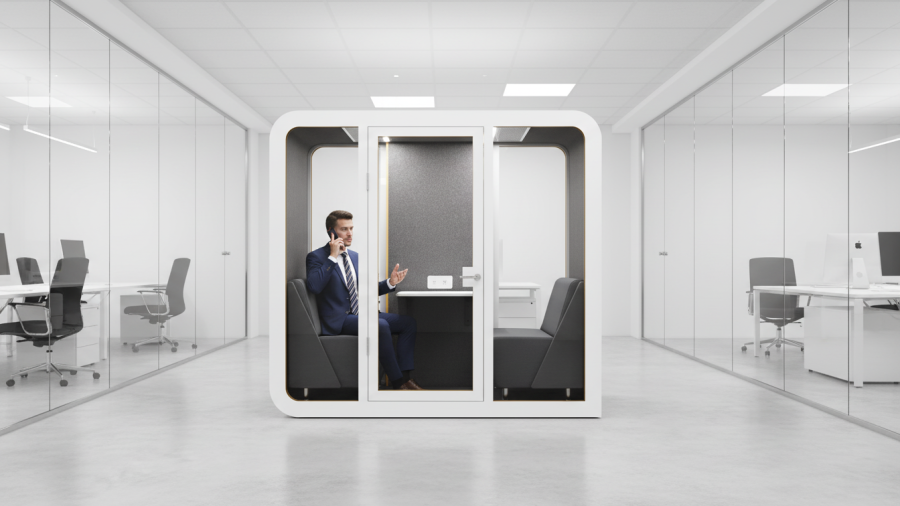
10 Ways a Private Phone Booth Enhances Workplace Privacy
In today’s open-plan offices, a phone booth is no longer a novelty—it’s a practical, people-centered way to restore calm, protect conversations, and help teams do their best work. As organizations adopt hybrid workplace strategies and flexible floor plans, purpose-built pods and booths create instant, high-performance quiet zones that support productivity and privacy without costly construction.
What Is an Office Phone Booth?
An office phone booth—also known as a privacy pod, soundproof pod, or acoustic phone booth—is a compact, self-contained space engineered to deliver both acoustic and visual privacy for individual calls, video conferences, and focused work. Unlike traditional meeting rooms or larger work pods, it is optimized for short to medium durations, fast turnover, and personal comfort within a small footprint—an ideal fit for acoustic solutions for workspaces that must perform within open-plan layouts.
Where a small meeting room may serve two to four people and encourage collaboration, an office phone booth is purpose-built for one person, emphasizing sound isolation, ergonomic postures for calls, and task lighting. A workplace phone booth also differs from traditional “hot-desking” or huddle areas by offering controlled acoustics, ensuring speech confidentiality and fewer distractions—hallmarks of a modern phone booth for the hybrid workplace. For teams that want a single, integrated unit, an office phone booth pod offers the same privacy in a turnkey, technology-ready format.
Common applications include:
- Confidential phone calls with clients or partners
- Video conferencing or webinars
- A quiet focus room for drafting, coding, or analysis
- Quick 1:1 check-ins or coaching sessions
- Recording short internal videos or voice notes
Comparison at a glance:
- Office phone booth: 1 person; high acoustic and visual privacy; short-to-medium sessions.
- Meeting booth: 2–4 people; collaborative discussions; moderate-to-high privacy.
- Open office area: Many people; low privacy; high ambient noise.
How a Private Phone Booth Improves Workplace Privacy and Productivity
Open-plan spaces can amplify noise, reduce territorial privacy, and increase the frequency of interruptions—each a known drag on cognitive performance. A private phone booth counters these issues with targeted acoustic design, ergonomic seating/worksurfaces, and controlled lighting and ventilation. The result is a calmer microenvironment that reduces mental load, supports sustained attention, and protects sensitive conversations—outcomes repeatedly linked to better productivity and privacy in studies of knowledge work.
Consider the everyday pain points—and the solution:
- Constant noise and cross-talk lead to errors and fatigue. An acoustic phone booth cuts background noise and provides reliable sound isolation.
- Lack of private spaces delays critical conversations. An open office phone booth offers instant access to a secure, distraction-free zone.
- Video calls disrupt nearby colleagues. A call booth for office use contains voices, improving etiquette and overall floor harmony.
- HR and client discussions risk being overheard. Purpose-built enclosures create a neutral, confidential space and reduce compliance risk.
Real-world examples: HR leaders gain a dependable place for sensitive 1:1s, while sales teams close deals faster when every negotiation happens in a controlled, interruption-free environment.
10 Ways a Private Phone Booth Enhances Workplace Privacy
Modern office phone booth pods and workplace phone booths combine acoustics, ergonomics, and smart technology to elevate the user experience. Below are ten focused ways these solutions protect privacy—each contributing to a more effective, resilient, and people-friendly workspace.
1. Acoustic Soundproofing for Confidentiality
The foundation of privacy is sound control. A soundproof phone booth with ≥30 dB reduction in the speech band keeps voices intelligible inside while rendering them unintelligible outside, safeguarding discussions about people, products, and pricing. By concentrating on the office frequency range (roughly 150–500 Hz), an acoustic phone booth neutralizes the very tones that carry conversation in open spaces—an essential part of acoustic solutions for workspaces.
Key elements that improve sound isolation:
- Multilayer acoustic wall construction with dense, sound-absorbing cores
- Triple-layer (triplex) safety glass that dampens resonance
- Sealed door systems and precision gaskets
- Decoupled frames that limit vibration transfer
2. Blocking Ambient Office Noise and Distractions
A private, quiet phone booth filters out the hum of HVAC, keyboard chatter, and corridor conversations that chip away at concentration. Delivering open-plan office noise reduction right where work happens, a soundproof booth for office use helps knowledge workers sustain focus longer, make fewer errors, and reduce stress. An open office phone booth is particularly valuable for programmers deep in logic, analysts running financial models, and creatives protecting their flow state.
3. Providing Visual Barriers for Focus
Attention is disrupted by sights as much as sounds. Frosted or triple-glazed walls, combined with a physical enclosure, create a visual buffer that reduces the cognitive pull of movement in the periphery. This transforms the space into a true focus room, where people can think clearly and recharge between meetings—a hallmark of the modern phone booth. Visual privacy works in tandem with acoustic control to lower stress and boost throughput.
4. Creating Zones for Confidential Communication
Sensitive discussions deserve a predictable setting. From HR conversations and manager 1:1s to legal reviews and investor updates, a workplace phone booth creates a bounded zone that protects informational privacy. A phone booth for calls also signals to colleagues that the user is unavailable, reducing interruptions and reinforcing confidentiality norms across the floor.
Typical use cases include:
- HR interviews and performance reviews
- Client negotiations and sales calls
- Finance and legal briefings
- Health, benefits, or personal matters
- Executive decision-making touchpoints
5. Ensuring Comfortable Ventilation and Air Quality
Privacy only works if people want to stay in the space. Efficient, quiet ventilation and consistent air exchange prevent stuffiness and CO₂ buildup, helping users remain alert and comfortable during back-to-back calls. High air quality supports cognitive performance, stabilizes mood, and makes short sessions more effective—especially important during peak collaboration windows.
6. Integrating Smart Technologies and Occupancy Controls
A connected office phone booth pod can automate lighting, ventilation, and availability indicators via motion sensors, touchscreens, and booking integrations. These smart features speed up turnover, reduce energy waste, and give facilities teams accurate utilization data—vital in hybrid workplaces with fluctuating attendance. A soundproof phone booth that integrates with scheduling tools drives higher adoption, better planning, and fewer scheduling conflicts.
7. Supporting Flexible Office Layouts
A modular phone booth relocates as your business changes. Compared with permanent construction, pods can be installed quickly, moved with minimal disruption, and reconfigured to support new headcount, team structures, or neighborhood concepts.
Benefits for dynamic floor plans:
- Repurpose underutilized space without heavy renovation
- Scale up or down to match hiring and hybrid patterns
- Pilot new layouts before making capital commitments
- Maintain business continuity during reconfigurations
8. Leveraging Sound Masking Features for Added Privacy
Some booths include or complement sound masking—low-level, engineered background noise that makes speech less intelligible at a distance. This preserves the privacy bubble around the enclosure and can improve the overall acoustic comfort of adjacent zones. Deployed near shared desks, reception, or collaboration hubs, masking helps the office phone booth work in concert with the larger floor plan.
9. Complying with Data and User Privacy Regulations
Smart occupancy and booking features should respect user data. Modern systems favor anonymous, aggregated analytics and role-based access, aligning with privacy frameworks such as the CCPA and similar regulations. This approach mitigates risk, reinforces trust, and ensures the technology uplift does not introduce compliance gaps.
10. Reducing Stress and Enhancing Well-being
Access to a dependable retreat improves the workday. A quiet phone booth gives employees a place to reset between meetings, prepare for high-stakes conversations, or complete deep work—reducing stress and increasing job satisfaction. For managers, analysts, designers, and sales teams alike, the ability to step into a truly private phone booth turns hectic schedules into manageable ones.
Experience the Silentbox Difference for Your Workplace
Silentbox designs and manufactures high-performance booths that embody the principles above—advanced acoustic materials, triple-layer triplex glass, smart electronics, and ergonomic interiors that feel natural for calls, video, and focused tasks. Each model is engineered for comfort, sound isolation, and seamless technology integration, making Silentbox a dependable partner for open-plan office noise reduction and flexible workspace solutions.
What sets Silentbox apart:
- Acoustic excellence: Up to ~35 dB speech-band reduction via multilayer panels and triplex glass for reliable confidentiality in a soundproof phone booth.
- Smart comfort: Automatic LED lighting and ventilation with silencers, motion sensors, and optional connected scheduling tools.
- Ergonomic, premium materials: Thoughtful seating/worksurface geometry, natural finishes, and durable components built for daily use.
- Sizes for every need: Solo and Solo Lite for one person; Duet and Duet Lite for two; Quartet and Quartet Lite for up to four.
- Configurable interiors: Tables, sofas or stools, shelving, bag hooks, and custom finishes/colorways to match brand décor.
- Dependable ops: Typical delivery in ~20–35 days and a 2-year warranty, with global organizations already standardizing on Silentbox.
Selected highlights:
- Silentbox Solo: For single users; ~35 dB reduction; automatic ventilation (~30 m³/h), LED lighting, 220V + dual USB, and motion-activated controls.
- Silentbox Duet: Two-person meeting booth; ~35 dB reduction; powerful airflow (~90 m³/h), sofas, table, and sensor-based control.
- Silentbox Quartet: Up to four people; scaled acoustics and ventilation, presence sensors, customizable finishes.
- Solo Lite, Duet Lite, Quartet Lite: Lightweight footprints with SMART ventilation/lighting and USB/Type‑C power; ideal where space or mobility is at a premium.
If you’re planning a hybrid workplace or rethinking your acoustic design, Silentbox booths create high-impact privacy zones without construction—boosting focus, compliance, and well-being from day one.
Frequently Asked Questions about Phone Booths
How customizable is a phone booth for different office designs?
Most providers offer a wide range of options—sizes, exterior/interior finishes, glass styles, furniture configurations, and branding—so the booth complements your décor while meeting functional needs.
What are the installation and maintenance requirements for office phone booths?
Booths arrive as modular components that assemble quickly with minimal disruption; ongoing maintenance is typically limited to filter changes, surface cleaning, and periodic checks of lighting and ventilation.
Can an office phone booth be easily relocated within the workspace?
Yes. Because booths use modular construction, they can be disassembled, moved, and reassembled as floor plans evolve, supporting agile workplace strategies.
Are there options for integrating scheduling or occupancy software?
Many booths include smart occupancy sensors, availability lights, touch panels, and integrations with room-booking platforms, enabling analytics and streamlined scheduling in hybrid environments.
How is user privacy and data security ensured with smart phone booths?
Systems generally collect anonymous, aggregated usage data and follow best-practice security controls to comply with regulations such as the CCPA, protecting user trust while informing space planning.
Ready to hear the difference? Talk to Silentbox about deploying the right mix of models to create private, productive zones across your floor—without sacrificing the openness your teams value.